

 Image 1 of 2
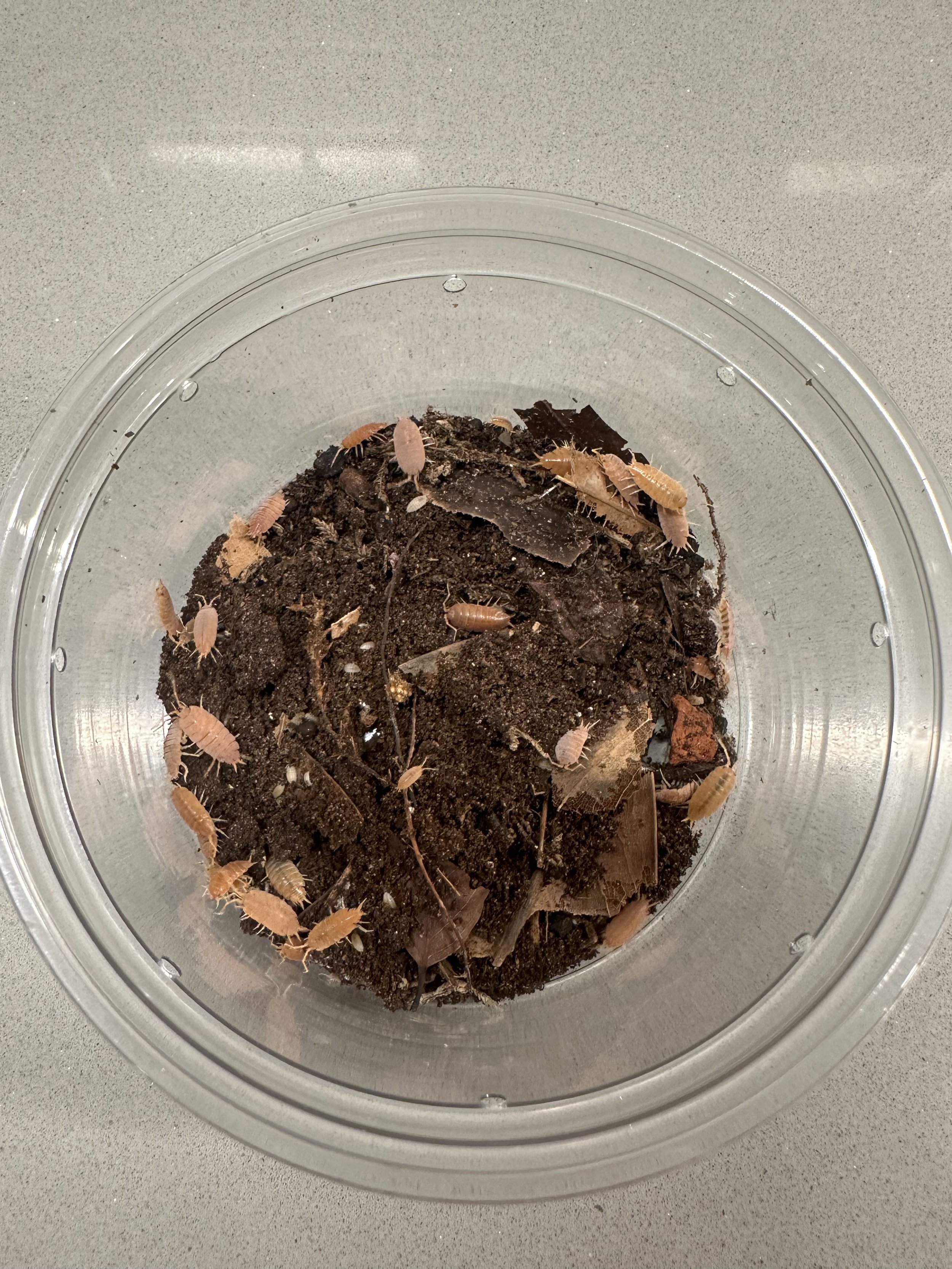 Image 2 of 2
The Porcellionides pruinosus “Powder Blue/Powder Orange” is an extremely active and prolific species! These cultures come with a minimum of 20 isopods usually more of varying ages. They are a great cleanup crew and extremely active, you will always be able to see some moving around in enclosures. They work as a supplemental feeder too! This is a very easy and beginner friendly species and can handle being neglected, they are vary tolerant of variety of conditions.
Isopods will need an enclosure with a soil based substrate mixed with decaying wood, sphagnum moss, leaf litter and calcium chunks or eggshells. One side of the enclosure should stay pretty damp by placing about ¼ of the enclosure with sphagnum moss that you will need to mist regularly to help them regulate and breath. The other side should be drier to create the microclimates they want to live in.
They primarily eat decaying leaves and woot rot. I typically use magnolia, maple, and oak leaves but will use others as well. In addition I feed all my isopods Repashy Morning Wood supplement, fish flakes, freeze dried minnows, freeze dried peas, cuttlebone, oyster shell, veggies such as carrots and zucchini. A balanced and diverse diet is always helpful!
The Porcellionides pruinosus “Powder Blue/Powder Orange” is an extremely active and prolific species! These cultures come with a minimum of 20 isopods usually more of varying ages. They are a great cleanup crew and extremely active, you will always be able to see some moving around in enclosures. They work as a supplemental feeder too! This is a very easy and beginner friendly species and can handle being neglected, they are vary tolerant of variety of conditions.
Isopods will need an enclosure with a soil based substrate mixed with decaying wood, sphagnum moss, leaf litter and calcium chunks or eggshells. One side of the enclosure should stay pretty damp by placing about ¼ of the enclosure with sphagnum moss that you will need to mist regularly to help them regulate and breath. The other side should be drier to create the microclimates they want to live in.
They primarily eat decaying leaves and woot rot. I typically use magnolia, maple, and oak leaves but will use others as well. In addition I feed all my isopods Repashy Morning Wood supplement, fish flakes, freeze dried minnows, freeze dried peas, cuttlebone, oyster shell, veggies such as carrots and zucchini. A balanced and diverse diet is always helpful!