

 Image 1 of 1
Culture consists of 10 isopods.
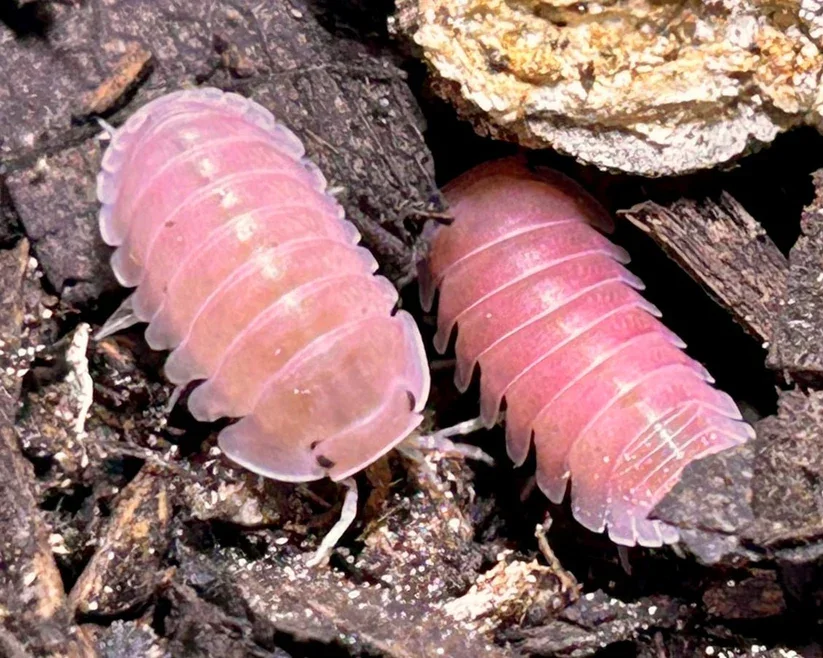
Cherry Blossom Isopods are a beautiful specialty isopod known for their soft pastel pink, peach, and cream coloration. Their delicate coloring and pale segment edges give them a unique appearance reminiscent of cherry blossoms in bloom. As they mature, their pink tones can become more pronounced, making adults especially eye-catching.
Cherry Blossoms are a selectively bred color line associated with Cubaris sp. “Red Pak Chong” stock. They enjoy warm, humid conditions, moisture-retentive substrate, and plenty of organic material. Like many specialty Cubaris, they tend to establish and reproduce more slowly than hardier beginner species, making them especially rewarding for keepers who enjoy watching a colony develop over time.
Temperature: 72–78°F. Consistent warmth is preferred. Avoid prolonged temperatures above 80°F and sudden temperature swings.
Humidity: High humidity, approximately 75–85%, with a moisture gradient. Keep one area consistently moist with sphagnum moss while allowing a small area to be slightly less moist.
Substrate: 3–4 inches of moisture-retentive substrate made with organic soil, decomposing hardwood, leaf litter, and sphagnum moss.
Ventilation: Gentle to moderate ventilation is best. Provide enough airflow to prevent stagnant conditions while maintaining high humidity.
Hides: Provide cork bark, decaying hardwood, thick leaf litter, and damp sphagnum moss for hiding, grazing, and moisture retention.
Lighting: No special lighting required. Ambient room lighting is sufficient; avoid direct sunlight and excessive heat.
Cherry Blossom Isopods feed primarily on decaying leaf litter and rotting hardwood. Supplement their diet with small amounts of vegetables, protein-rich foods, and prepared isopod diets. A calcium source such as cuttlebone should always be available to support healthy growth and molting.
Maintain a warm and stable enclosure environment, avoiding rapid temperature fluctuations.
Keep the substrate moist throughout, with a damp moss refuge and a slightly drier area for choice.
Provide plenty of leaf litter and decaying hardwood as a continuous food source.
Offer supplemental protein periodically to support growth and reproduction.
Remove uneaten fresh food before it spoils or develops excessive mold.
Cherry Blossom juveniles may appear pale or less pink than adults; coloration can develop with maturity and successive molts.
These isopods can reproduce more slowly than many common hobby species, so avoid over-disturbing the enclosure and allow the colony time to establish.
Difficulty: Intermediate
Cherry Blossom Isopods are an excellent choice for collectors looking for a delicate, pastel-colored Cubaris with a rewarding long-term breeding experience. Their beautiful pink coloration, unique appearance, and slower colony development make them a standout addition to any specialty isopod collection.