

 Image 1 of 1
Culture consists of 15 + isopods.
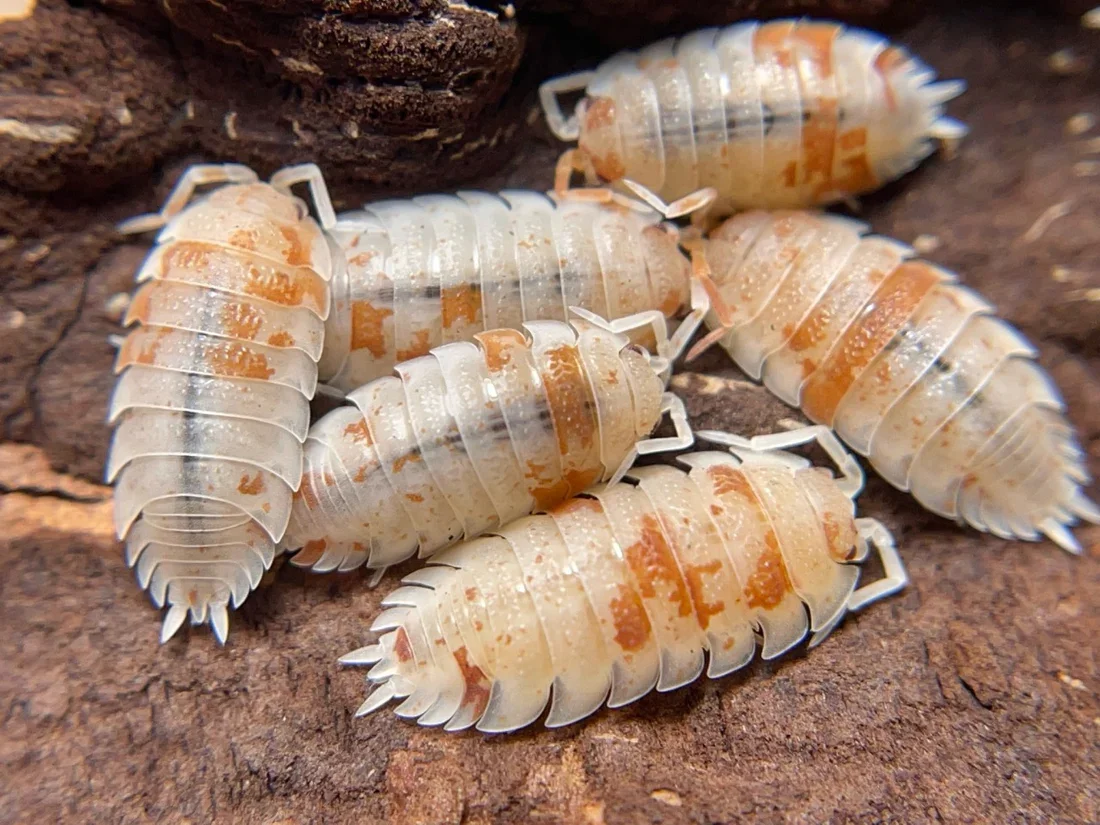
Orange Dalmatian Isopods are a colorful variety of Porcellionides pruinosus, known for their bright orange spots across their white bodies. Their unique spotted pattern gives each individual its own distinctive appearance, making them a fun and eye-catching addition to any isopod collection. Like other Powder Isopods, they are active, hardy, fast-reproducing, and adaptable to a variety of enclosure setups. They thrive in well-ventilated enclosures with a moisture gradient, plenty of leaf litter, decaying hardwood, and hiding places.
Husbandry & Care
Temperature: 70–80°F. Room temperatures are generally suitable. Avoid prolonged excessive heat.
Humidity: Moderate humidity with a moisture gradient. Keep one corner or section consistently moist while allowing the remainder of the enclosure to stay relatively drier.
Substrate: Provide 2–3 inches of substrate consisting of organic soil, flake soil, decaying hardwood, leaf litter, and moisture-retaining materials.
Ventilation: Good ventilation is important. This species does well with fresh airflow and should not be kept in stagnant or overly wet conditions.
Hides: Provide cork bark, leaf litter, rotting wood, and sphagnum moss in the moist area for shelter and molting.
Lighting: No special lighting required; ambient room lighting is sufficient. Avoid direct sunlight.
Diet
Leaf litter and decaying hardwood should always be available as their primary food source. Supplement occasionally with vegetables such as carrot, squash, sweet potato, zucchini, or cucumber, along with protein sources such as fish flakes, dried shrimp, or dried insects. Provide a calcium source at all times, such as cuttlebone, limestone, or crushed eggshell.
Care Tips
Orange Dalmatian Isopods are hardy, active, and prolific breeders once established. Maintain a moisture gradient by keeping one area moist while allowing the opposite side to remain relatively drier. Provide plenty of leaf litter and hiding places to help them feel secure. Avoid overfeeding, and remove uneaten supplemental foods to prevent mold and unwanted pests. As the colony grows, monitor population density and expand the enclosure or split the culture as needed.
Difficulty: Beginner
With their bright orange coloration, spotted pattern, energetic behavior, and rapid reproduction, Orange Dalmatian Isopods are an excellent choice for beginners, collectors, and bioactive enthusiasts alike.