

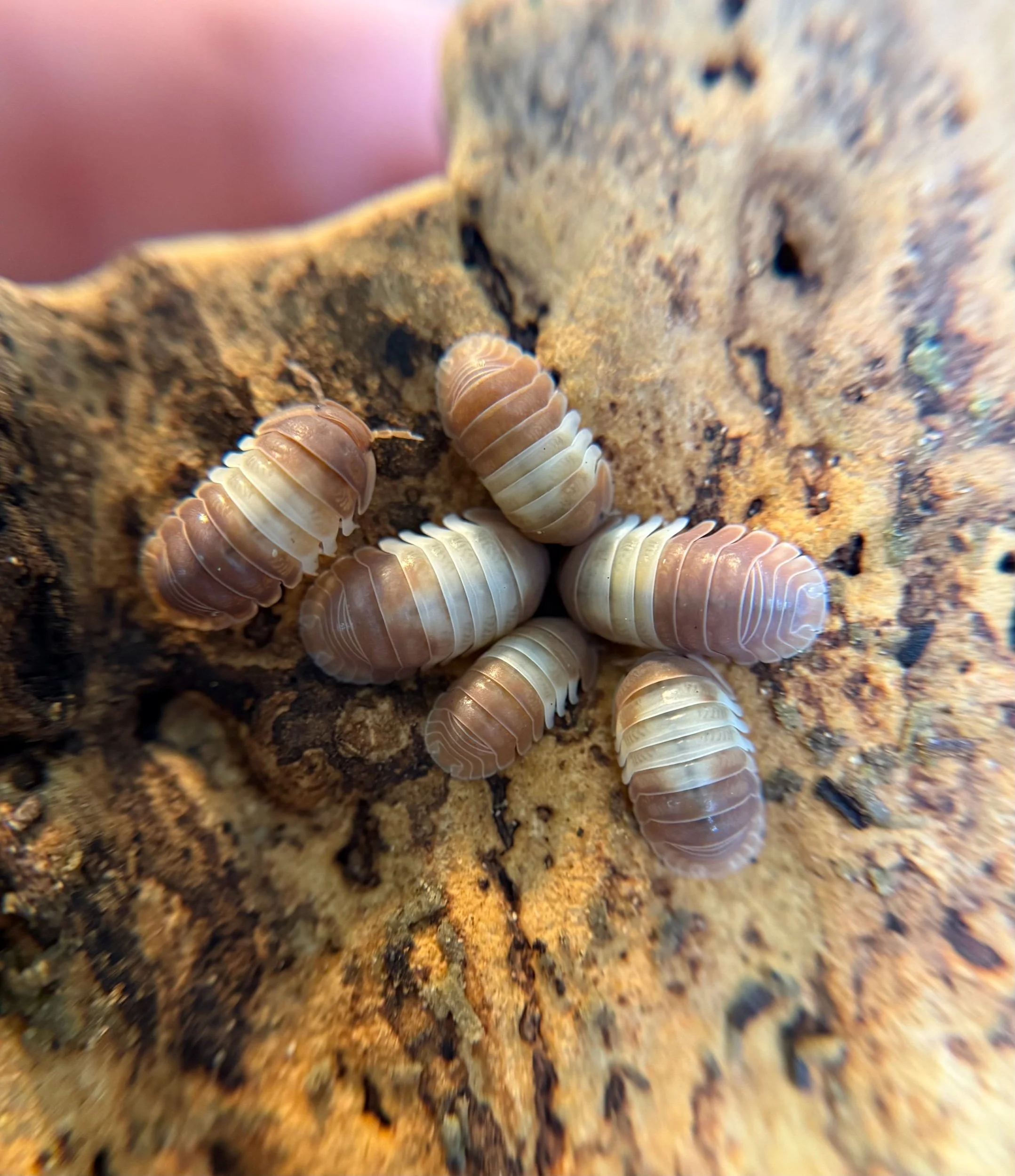
 Image 1 of 4
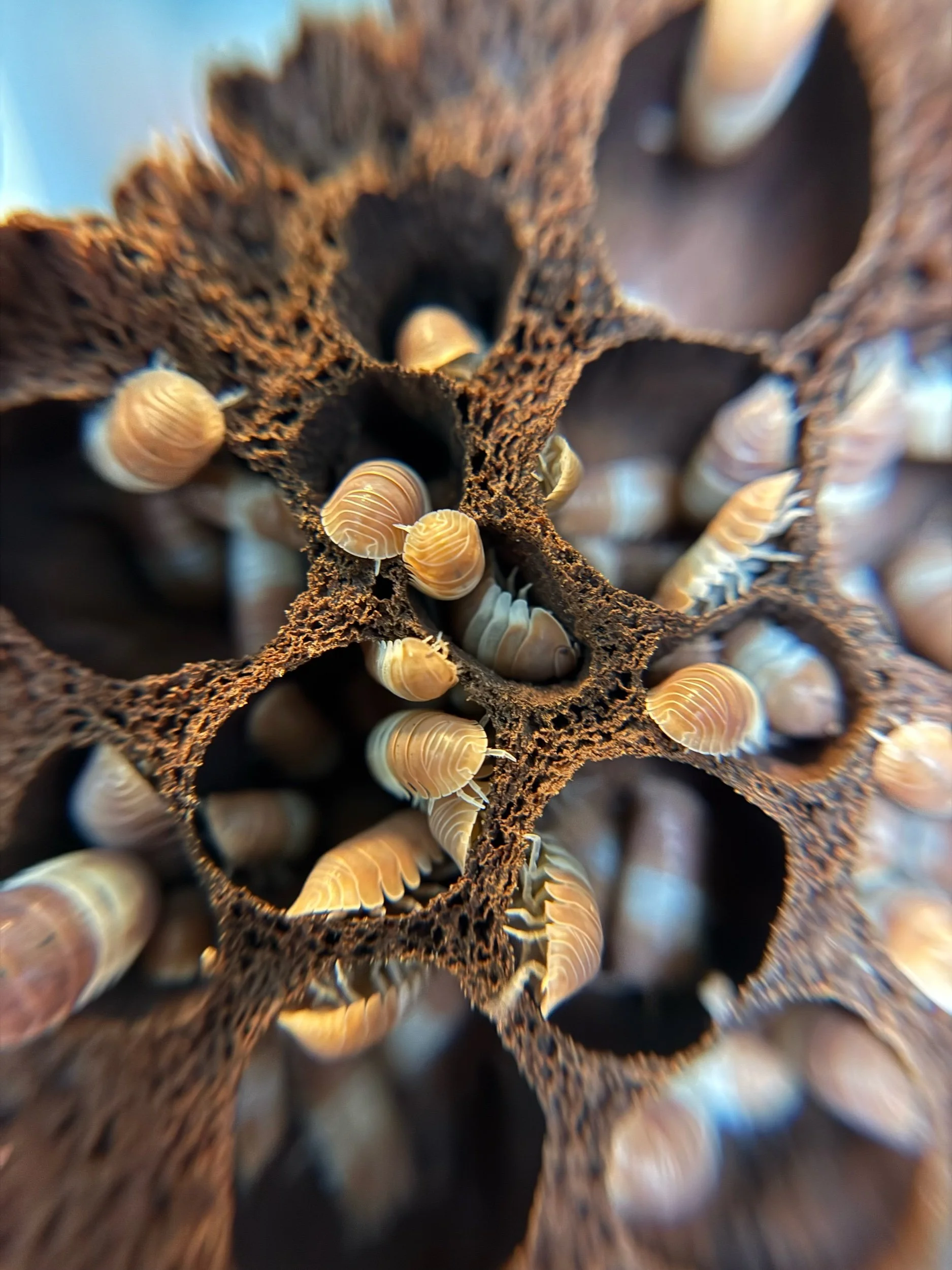 Image 2 of 4
 Image 3 of 4
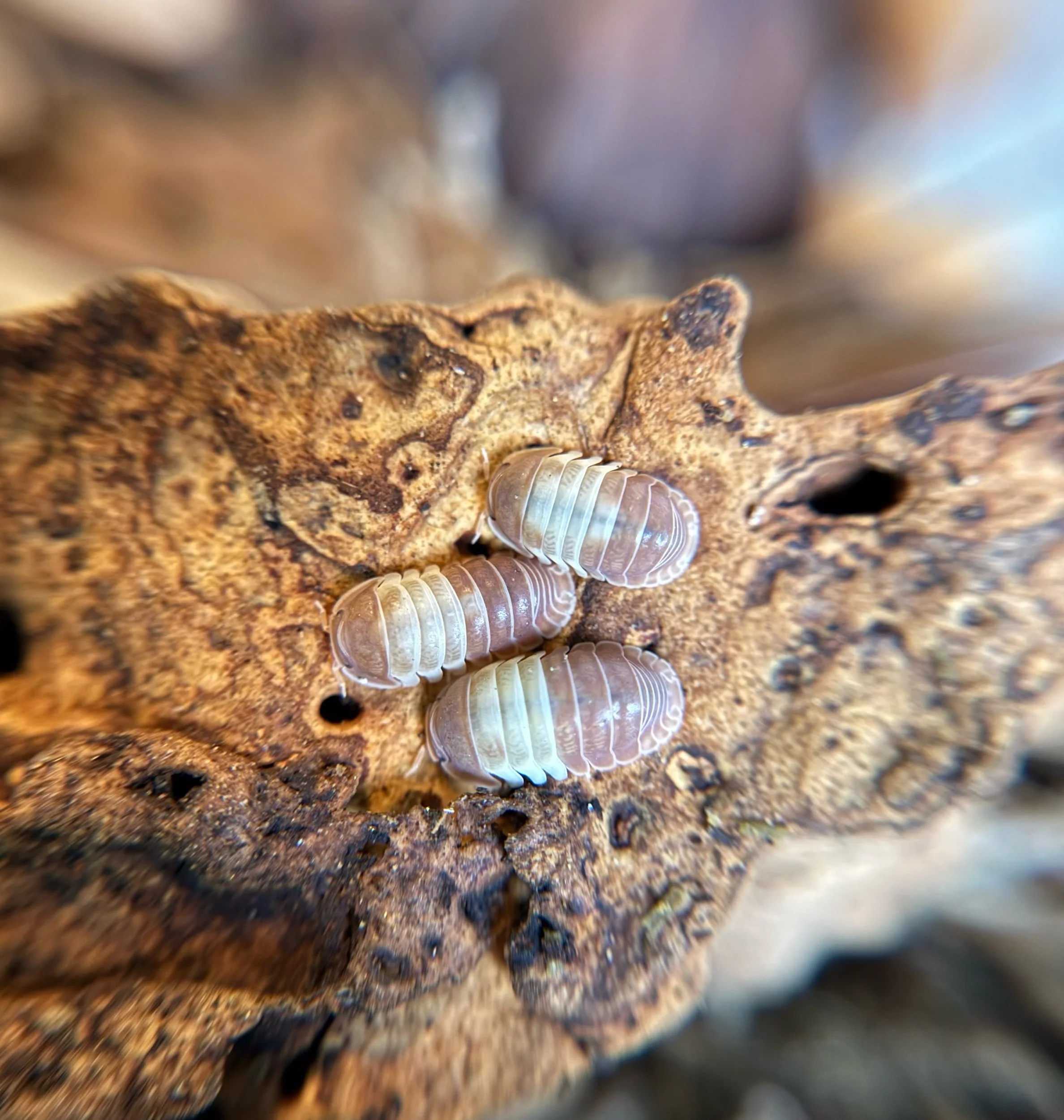 Image 4 of 4
Culture consists of 10 isopods.
Red Panda King Isopods are a striking color variety of Panda King isopods, prized for their unique reddish-orange, rust, and cream coloration. Their beautiful contrasting bands and compact, rounded appearance make them a standout addition to any isopod collection. Like other Cubaris varieties, they prefer a warm, humid environment with moisture-retentive substrate, plenty of leaf litter, decaying hardwood, and sheltered hiding places. They are a rewarding species for hobbyists looking to keep a colorful, slower-establishing colony.
Husbandry & Care
Temperature: 70–78°F. Maintain stable temperatures and avoid prolonged heat, especially above 80–82°F.
Humidity: Moderate-high to high humidity. Maintain a moisture gradient with a consistently moist area and a slightly drier area.
Substrate: Provide 3–4 inches of substrate consisting of organic soil, flake soil, decaying hardwood, leaf litter, and sphagnum moss.
Ventilation: Gentle to moderate ventilation is recommended. Maintain airflow without allowing the enclosure to dry out too quickly.
Hides: Provide cork bark, leaf litter, rotting wood, and damp sphagnum moss for shelter and moisture retention.
Lighting: No special lighting required; ambient room lighting is sufficient. Avoid direct sunlight.
Diet
Leaf litter and decaying hardwood should always be available as their primary food source. Supplement occasionally with vegetables such as carrot, squash, sweet potato, or zucchini, along with protein sources such as fish flakes, dried shrimp, or dried insects. Red Panda Kings benefit from a varied supplemental diet, but avoid overfeeding. Provide a calcium source at all times, such as cuttlebone, limestone, or crushed eggshell.
They do especially well with freeze dried minnows, carrots and the repashy supplement “morning wood”.
Care Tips
Red Panda King Isopods do best in stable, humid enclosures and should not be allowed to dry out. Maintain a damp section of substrate with moss while avoiding excessive water buildup or stagnant air. They are naturally shy and may spend much of their time beneath bark or buried in substrate. Newly established cultures should be given time to settle with minimal disturbance. Remove uneaten supplemental foods to prevent mold and unwanted pests.
Difficulty: Beginner
With their vivid coloration, unique appearance, and rewarding colony behavior, Red Panda King Isopods are an excellent addition for collectors looking to expand into beautiful specialty Cubaris varieties.