

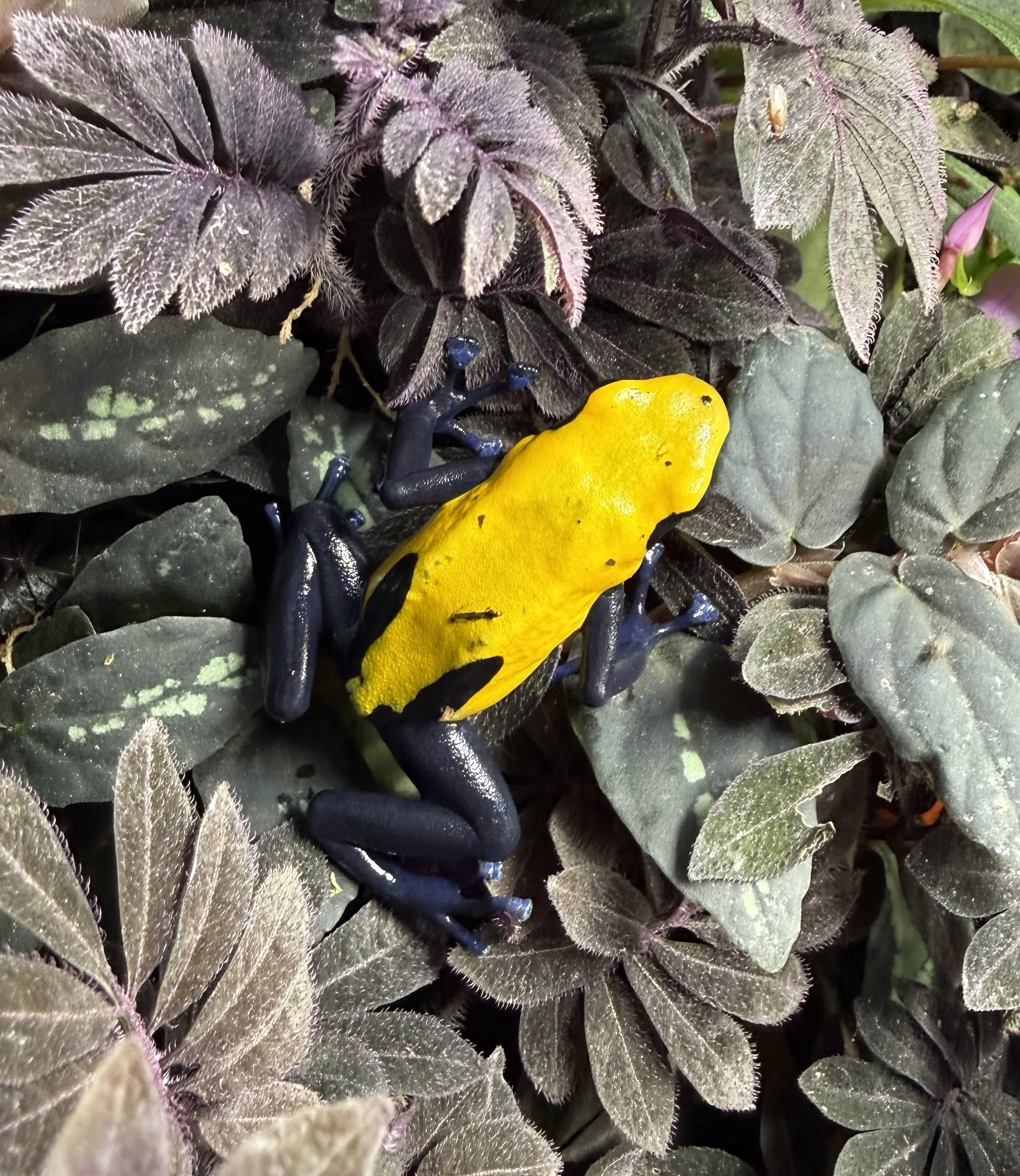
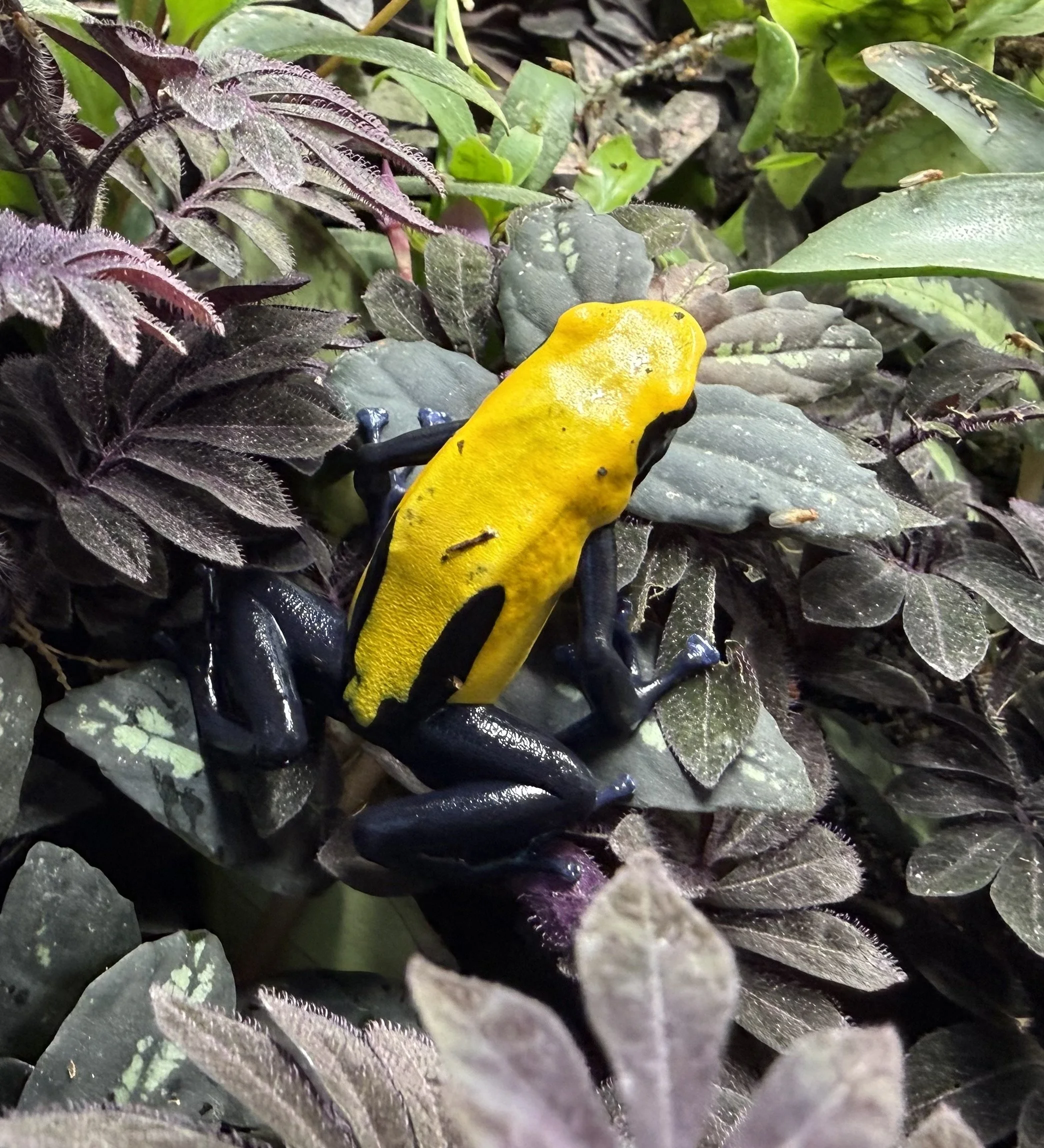
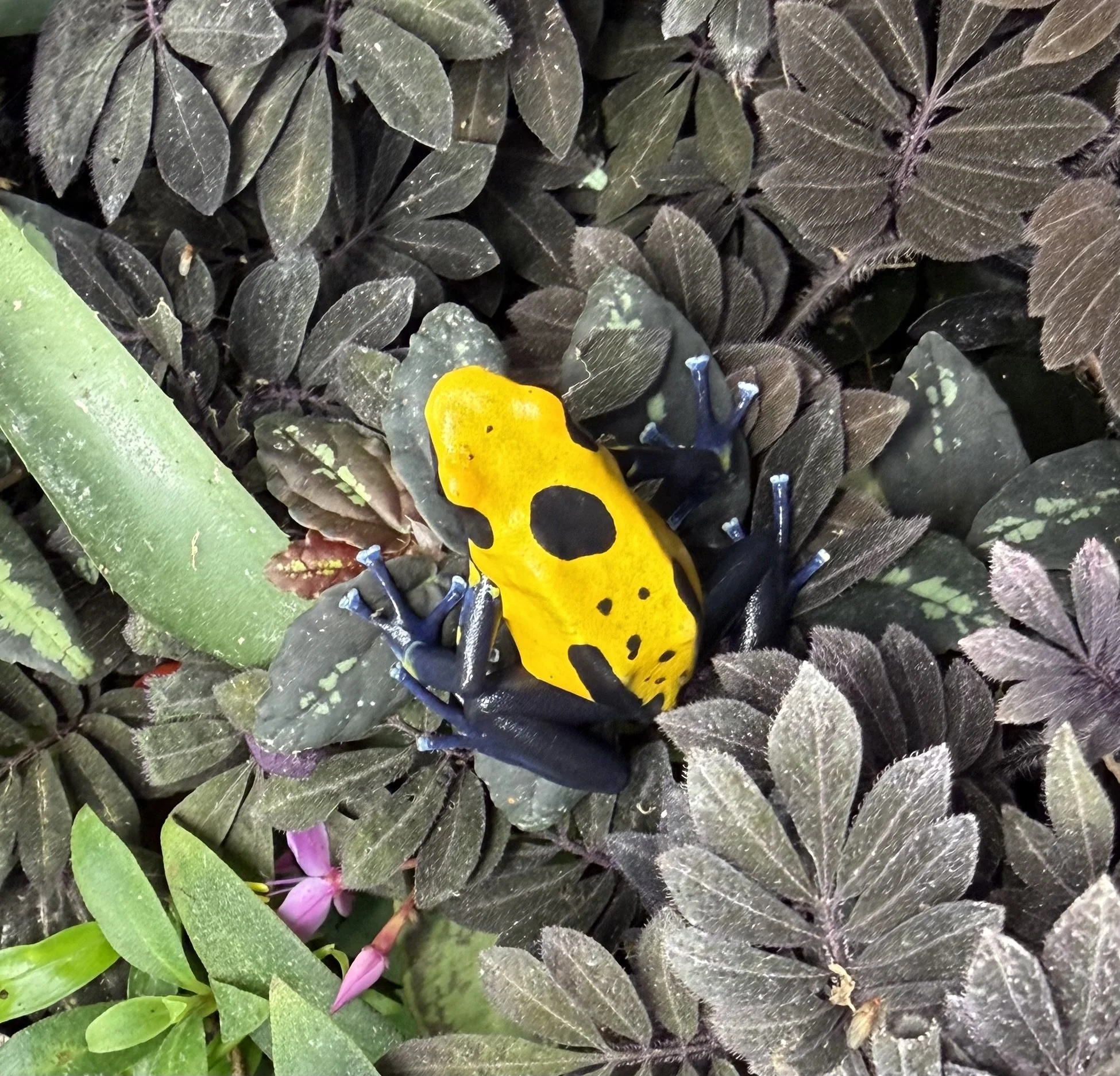
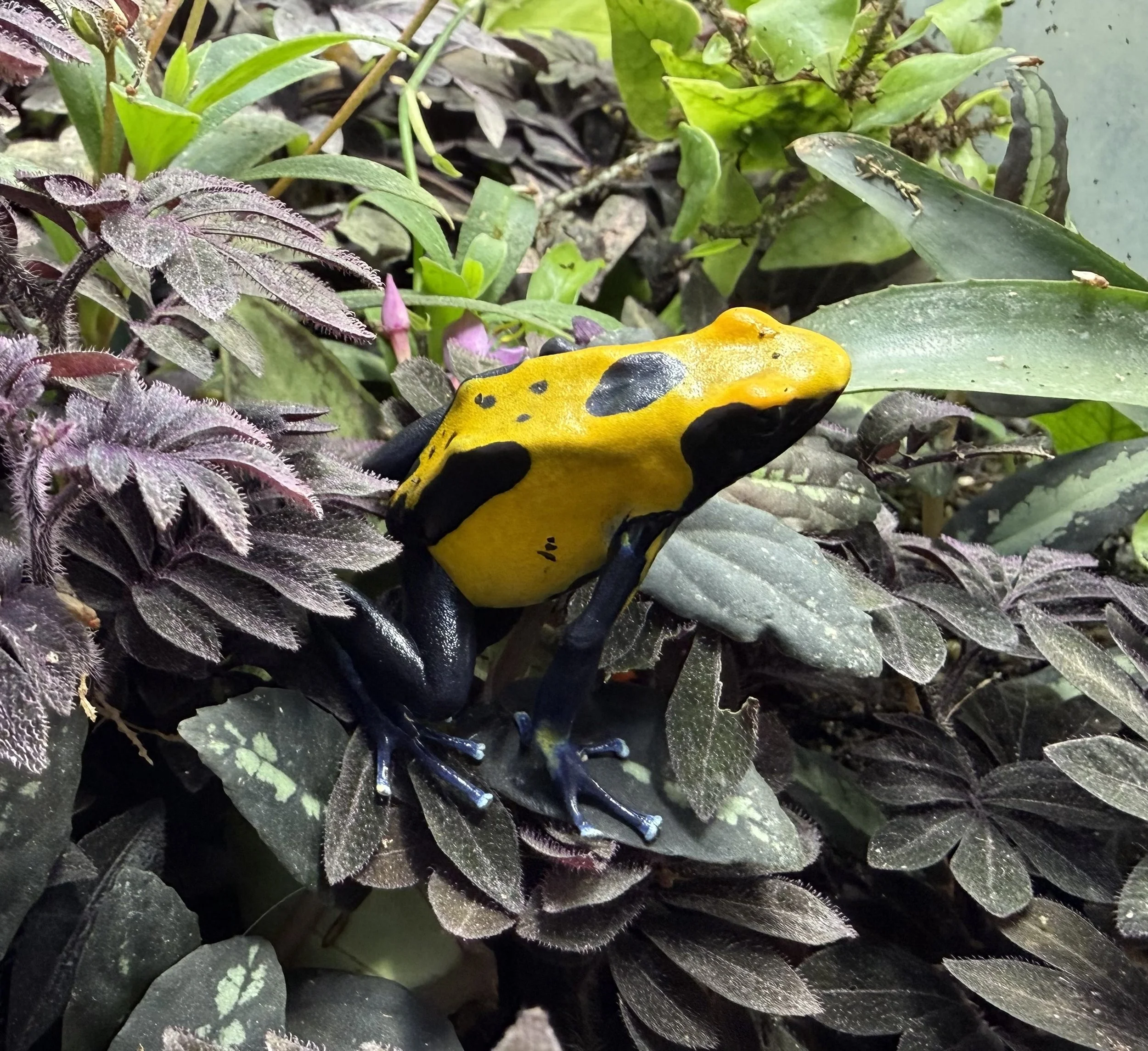
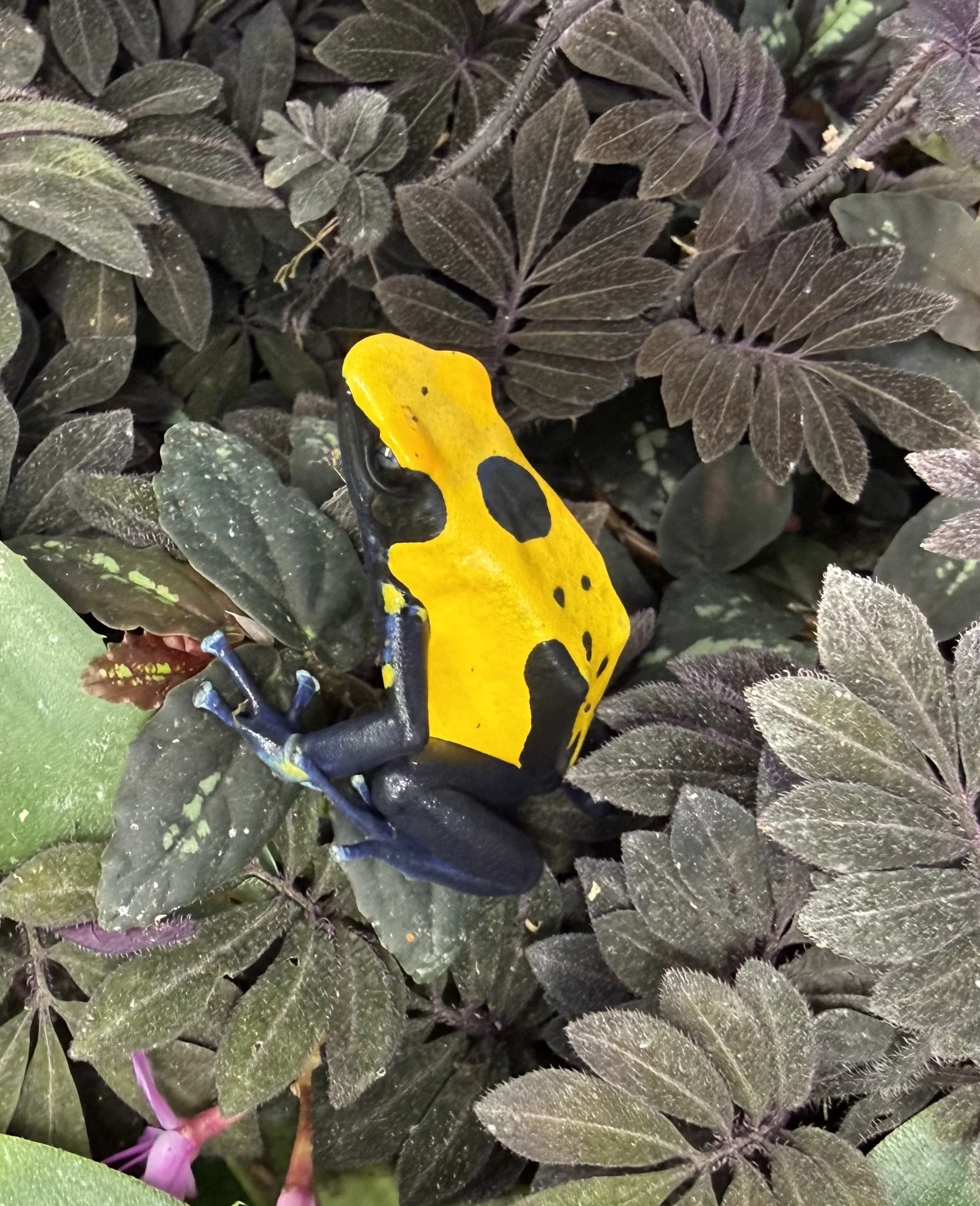
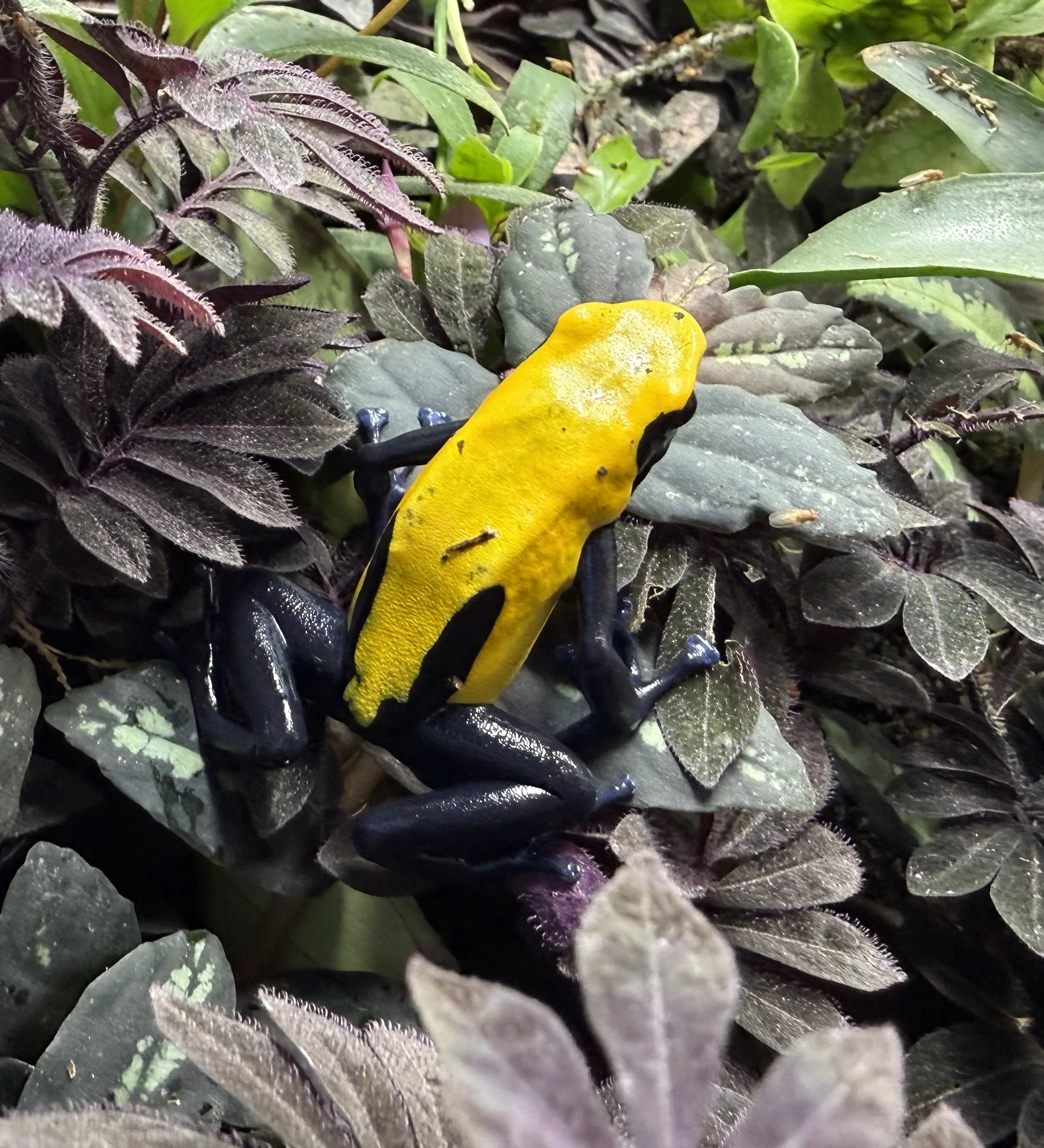
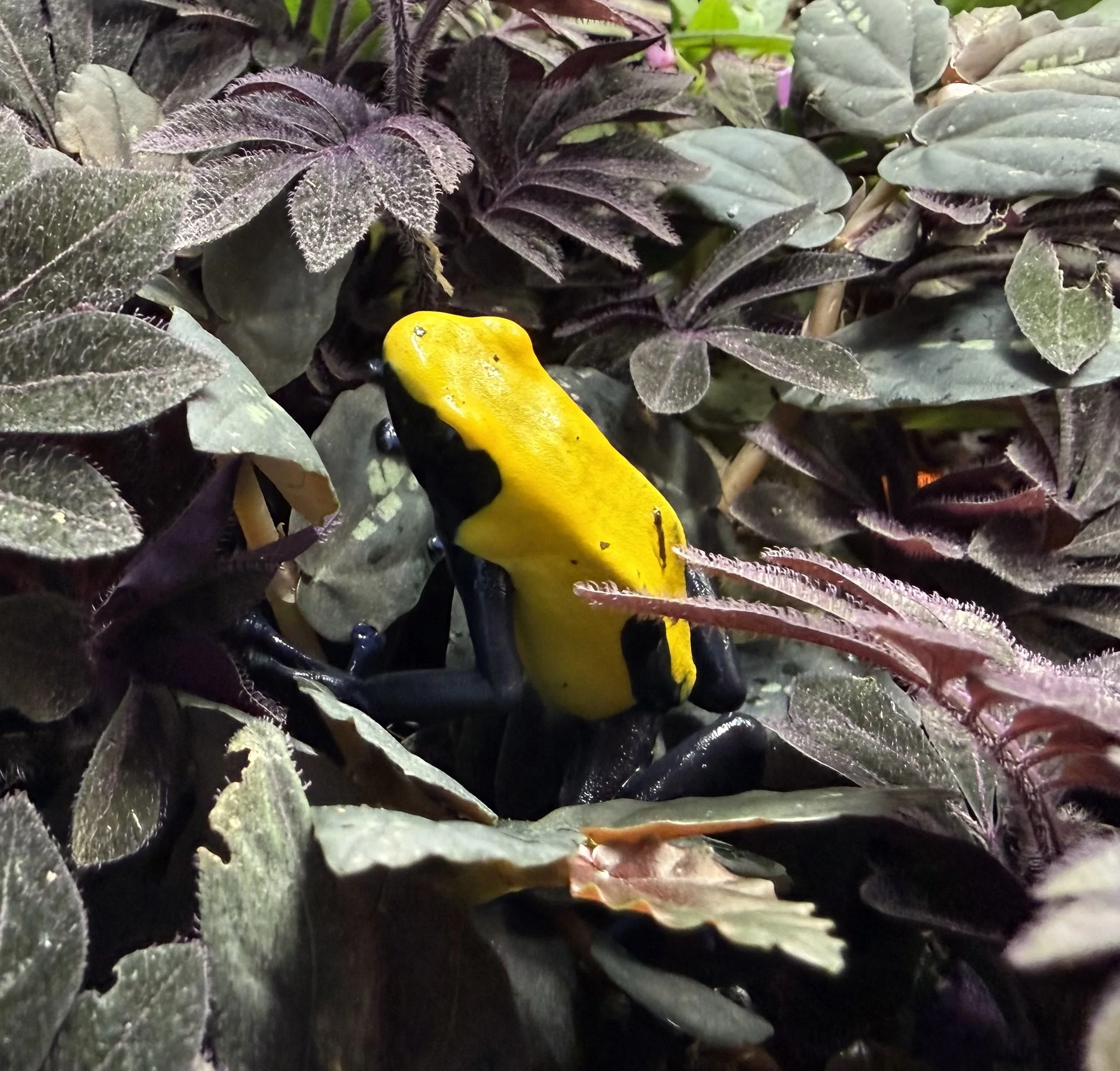
Citronella dart frogs are a great beginner dart frog for someone looking for a bold, hardy frog with striking yellow and blue coloration. They are one of the larger varieties of Dendrobates tinctorius, with males reaching around 2 inches and females capable of reaching 2.5–3 inches. Their bright lemon-yellow backs and deep blue legs make them an excellent centerpiece for a display vivarium. Of my breeding pair, the female has the spots and the male is solid yellow.
These are bold, active frogs that are primarily terrestrial and spend most of their time exploring the forest floor, leaf litter, and lower portions of the enclosure, although they will climb when given the opportunity. They do best in a heavily planted tank with plenty of leaf litter, cork bark, and hiding spots. Citronellas are best kept as a pair, as females can be territorial and aggressive toward one another, particularly in smaller enclosures. They have a quiet call and will readily breed when conditions are right. Use cocohuts, film canisters, or petri dishes for egg deposition and remove the eggs to raise separately, or collect the tadpoles after the male transports them. Males tend to have wider finger discs and a more defined back structure, while females are typically larger and fuller-bodied. They can reach sexual maturity within 10–16 months and lay eggs every 5–10 days, with clutch sizes ranging from 3–10 eggs. Metamorphosis takes on average around 100 days from tadpole to froglet. This species appreciates a humid, well-planted enclosure with good airflow and a shallow water feature.
Humidity: 80–100%
Temperature: 70–77°F, with low to mid-70s being ideal. Avoid overheating.
Food: Melanogaster and Hydeii fruit flies for adults, springtails and dwarf white isopods for juveniles and froglets.